Research Associate
Astronomical Observatory of Belgrade

 Српски
ORCiD: 0000-0003-4298-3247; Scopus ID: 57198352082
Researcher ID (WoS, Publons): T-5292-2017
Google Scholar: 7yASdewAAAAJ; еНАУКА: rp04419
Dr. Miljana D. Jovanović has been working at the Astronomical Observatory in Belgrade since 2015.
She is a member of the group "Dynamics of Planetary and Stellar Systems" (head Dr Ivana Milic Zitnik).
Astronomical Observatory of Belgrade
Astronomical Observatory of Belgrade
Astronomical Observatory of Belgrade
Astronomical Observatory of Belgrade
Doctor of Philosophy in Astronomy
Faculty of Mathemathics
University of Belgrade
Bachelor of Science in Mathematics
Faculty of Mathemathics
University of Belgrade
Bachelor of Science in Astronomy
Faculty of Mathemathics
University of Belgrade

As an undergraduate student (during 2007), she examined telluric lines. She analyzed the changes in telluric lines with changes in air humidity. She performed observations with the Solar Spectrograph at the Astronomical Observatory. She presented the results together with Dr. Istvan Vince at the 6th Sub-Regional European Astronomical Committee conference which was held in Belgrade on 28-30 September 2009.
Also, during her student internship at the Observatory in Ondrejov, Czech Republic in 2007, together with Ivana Milić, she prepared a new observing program for the Photographic Zenith Tube, for a 20-year period.
She has been employed at the Astronomical Observatory in Belgrade (AOB) since April 2015. From then until 2019, she participated in the project of the Ministry of Education, Science and Technological Development BR 176011. She has been actively participating in photometric observations since 2016 at the Astronomical Station Vidojevica. CCD observations in the optical domain and analysis of photometric data were performed for objects of interest for the international projects Gaia-Follow-Up Network for Transients Objects (Gaia-FUN-TO), Black Hole Target Observation Manager (BH-TOM), Whole Earth Blazar Telescope (WEBT), as well as objects of importance for the formation of the Gaia Celestial Reference Frame - Gaia CRF, as part of her doctoral dissertation.
She defended her doctoral dissertation entitled: Variation of V and R magnitudes for selected quasars and the link between the Gaia CRF and ICRF systems, in May 2025. The task of the doctoral dissertation was to select suitable objects for linking two celestial coordinate systems: the International Celestial Reference Frame (ICRF) and Gaia CRF. Both coordinate systems are based on quasar observations. She analyzed her own and others' photometric observations in the optical domain (the observation period was about 6 years). She examined whether systematic changes and the existence of quasi-periodicity are present in the time series of brightness and color variabilities using methods based on spectral analysis and the least squares method. She selected 17 quasars suitable for connecting the two mentioned reference systems. You can download the doctoral dissertation (in Serbian) at this link.
Since 2017, she has been a participant in 6 Serbian-Bulgarian bilateral projects within the framework of the inter-academic agreement on scientific cooperation between the Serbian Academy of Sciences and Arts (SASA) and the Bulgarian Academy of Sciences (BAS). In 2026, she became the head of a Serbian-Bulgarian bilateral SASA-BAS project.
Since March 2026, she has been a participant in the MOBY project, which is funded by the Science Fund of the Republic of Serbia within the PRIZMA Program. Within the project, she is the leader of the work package Dissemination.
She collaborates with the Italian research institute in astronomy and astrophysics (INAF) observatory in Turin within the international Whole Earth Blazar Telescope (WEBT) project, which was confirmed by the cooperation agreement from 2023.
She collaborates with the European Astronomical Society of Small Telescopes (EASST.eu) and OPTICON-Alliance (opticon-alliance.eu) within the international Black Hole Target Observation Manager project.
She is a member of the Serbian Astronomical Society, the European Astronomical Society and the International Astronomical Union.

It's a state-of-the-art web server designed to coordinate a network of telescopes, manage astronomical observations, and process the data obtained from these observations.
Key Features:
Telescope Network Coordination: BHTOM enables you to collect photometry data from multiple telescopes for your time-domain targets.
Raw Data Processing: With BHTOM, you can upload your raw observations as fits or instrumental photometry. We will derive the PSF photometry and standardise the data to Gaia Synthetic Photometry filters automatically.
Archives: BHTOM will automatically gather photometric data already collected for your target of interest, enabling time-domain astronomy studies.
Automation: BHTOM functionalities can be fully automatised from your scripts. See our API documentation.
More details can be found on the project website at the
link.

Astronomical observatory, Belgrade established scientific collaboration with Istituto Nazionale di Astrofisica - Osservatorio Astrofisico di Torino (Italy). Researches from Osservatorio Astrofisico di Torino of Osservatorio Astrofisico di Torino are leading the international collaboration WEBT.
The Whole Earth Blazar Telescope (WEBT) is an international collaboration of optical, near-infrared, and radio observers who in concert have the capability to obtain continuous, high-temporal-density monitoring of blazars.
More details can be found on the project website at the
link.

The MOBY project is funded by the Science Fund of the Republic of Serbia within the PRIZMA Program. Within this project, we are searching for binary systems that can produce gravitational waves that have been detected at the LIGO and VIRGO observatories. The MESA evolutionary code is used. Since March 2026, she has been a participant in this project and the leader of the work package Dissemination.
More details can be seen on the project website at this link.
Project within the framework of the inter-academic agreement on scientific cooperation between the Serbian Academy of Sciences and Arts and the Bulgarian Academy of Sciences (period 2026-2028).
More details about the project can be found on the Astronomical observatory's website at the
link.
Project within the framework of the inter-academic agreement on scientific cooperation between the Serbian Academy of Sciences and Arts and the Bulgarian Academy of Sciences (period 2026-2028).
More details about the project can be found on the Astronomical observatory's website at the
link.

Project within the framework of the inter-academic agreement on scientific cooperation between the Serbian Academy of Sciences and Arts and the Bulgarian Academy of Sciences (period 2023-2025).
Project within the framework of the inter-academic agreement on scientific cooperation between the Serbian Academy of Sciences and Arts and the Bulgarian Academy of Sciences (period 2023-2025).

Project within the framework of the inter-academic agreement on scientific cooperation between the Serbian Academy of Sciences and Arts and the Bulgarian Academy of Sciences (period 2020-2022).

Project within the framework of the inter-academic agreement on scientific cooperation between the Serbian Academy of Sciences and Arts and the Bulgarian Academy of Sciences (period 2017-2019).
Project within the framework of the inter-academic agreement on scientific cooperation between the Serbian Academy of Sciences and Arts and the Bulgarian Academy of Sciences (period 2017-2019).

After joining the Astronomical Observatory in 2015, she became a member of the Dynamics and Kinematics of Celestial Bodies and Systems project, until project funding was terminated in 2019.
We present the most densely sampled multiband optical photometric observations of the peculiar BL Lacertae object OJ 287 from 2015 to 2025 with a focus on its optical activity on diverse timescales. We present a total of 2296, 10,927, 11,484, and 2982 data points in B, V, R, and I bands, respectively. The densely sampled observations allow us to keep track of the source evolution that it has exhibited since the start of the predicted major optical flaring activity at the end of 2015. The study reveals clear and persistent bluer-when-brighter trends in both the long-term and short-term variations. Different bands were cross-correlated with discrete correlation functions, which peak at zero lag, implying cospatial emission. Using eight optical spectra in the low-flux states of OJ 287 taken from 2017 October 21 to 2017 November 22, from Steward Observatory, we estimate the central black hole mass to be at least 3.89 × 10⁹ M⊙ from the [O III] line width. The emission mechanism of the binary black hole blazar, and its possible implication in various aspects of multimessenger astronomy, are briefly discussed.
We analyzed 19 yr of R-band data of the blazar 3C 454.3 from the Whole Earth Blazar Telescope archive, along with new data from its members and from public archives such as those provided by the Small and Moderate Aperture Research Telescope System and the Steward Observatory projects to search for quasiperiodic oscillations (QPOs). We detected a QPO of ∼433 days using Lomb–Scargle periodogram, which lasted from MJD 54980–58450 as detected by the weighted wavelet Z-transform technique, making it one of the most persistent QPOs ever detected in the optical regime. The phase dispersion minimization technique was also performed to further validate this QPO claim. We detected this signal at a global significance of 2.53σ across all methodologies. To explain the observed QPO, we have considered both models focused on the accretion disk around a supermassive black hole (SMBH), and those based purely on jet emissions. Plausible jet-based models involve a shock moving down the jet in a helical magnetic field, whereas the SMBH models could involve Lense–Thirring-effect-induced jet precession or dual jets in a binary SMBH system. We introduce a novel approach to distinguish genuine QPOs from spurious signals arising from annual seasonal gaps, a common limitation of ground-based observations.
TON 0599 (z = 0.7247) belongs to the few flat spectrum radio quasars (FSRQs) detected in the very high energy (VHE, E>100 GeV) gamma-ray band. Its redshift makes it currently one of the farthest VHE gamma-ray sources. It was detected for the first time with the MAGIC telescopes on 2017 December 15, and observed until December 29. The flux reached a maximum of about 50 per cent of the Crab Nebula flux above 80 GeV on the second night of observation, after which we witnessed a gradual decrease of the flux. The VHE gamma-ray spectrum connects smoothly to the one in the high energy ( E>100 MeV) band obtained from simultaneous observations with Fermi-LAT. It features a cut-off at energies around 50 GeV, indicating the location of the gamma-ray emission zone beyond the broad line region. In addition, we were able to follow the spectral evolution during the fading phase of the flare. Multiwavelength analysis based on observations in optical, near-infrared, and radio bands acquired by the Whole Earth Blazar Telescope Collaboration from November to March, as well as observations in X-ray and optical─UV bands with instruments on board the Swift satellite, shows strong correlation between different bands. We model the broadband emission with a simple one-zone leptonic model, where the high-energy peak is predominantly produced by external Compton scattering of photons from the dusty torus.
Context. Microlensing events provide a unique way to detect and measure the masses of isolated, non-luminous objects, particularly dark stellar remnants. Under certain conditions, it is possible to measure the mass of these objects using photometry alone, specifically when a microlensing light curve displays a finite source (FS) effect. This effect generally occurs in highly magnified light curves, i.e. when the source and the lens are very well aligned. Aims. In this study, we analyse Gaia Alerts and Gaia Data Release 3 datasets, identifying four moderate-to-high-magnification microlensing events without a discernible FS effect. The absence of this effect suggests a large Einstein radius, implying substantial lens masses. Methods. In each event, we constrained the FS effect, and therefore established lower limits for the angular Einstein radius and lens mass. Additionally, we used the DarkLensCode software to obtain the mass, distance, and brightness distribution for the lens based on the Galactic model. Results. Our analysis established lower mass limits of ∼0.7 M⊙ for one lens and ∼0.3 − 0.5 M⊙ for two others. A DarkLensCode analysis supports these findings, estimating lens masses in the range of ∼0.42 − 1.70 M⊙ and dark lens probabilities exceeding 80%. These results strongly indicate that the lenses are stellar remnants, such as white dwarfs or neutron stars. Conclusions. While further investigations are required to confirm the nature of these lenses, we demonstrate a straightforward yet effective approach to identifying stellar remnant candidates.
Context. We analyze the optical variability of the flat-spectrum radio quasar (FSRQ) Ton 599 using BVRI photometry from the Whole Earth Blazar Telescope (WEBT) collaboration (2011–2023), complemented by photometric and spectroscopic data from the Steward Observatory monitoring program. Aims. We aim to characterize short- and long-term optical variability – including flux distributions, intranight changes, color evolution, and spectra – to constrain physical parameters and processes in the central engine of this active galactic nucleus (AGN). Methods. We tested flux distributions in each filter against normal and log-normal models and explored the root mean square (RMS)–flux relation. We derived power spectral densities (PSDs) to assess red-noise behavior. We quantified intranight variability using a χ2 test and fractional variability. From variability timescales, we estimated the emitting region size and magnetic field. Long-term variability was studied by segmenting the light curve into 12 intervals and analyzing flux statistics. For multi-filter flares, we computed spectral slopes, redshift-corrected fluxes, and monochromatic luminosities. Color-magnitude and color-time diagrams traced color evolution over different flux regimes and timescales. From low-flux spectra, we measured Mg II line properties (correcting for Fe II) to estimate the black hole mass via single-epoch scaling. Results. During the monitoring period, Ton 599 showed strong optical variability. Log-normal distributions fit the fluxes better than normal ones, and all bands display a positive RMS–flux relation. The PSDs follow red-noise trends. Intranight variability is detected, with derived timescales constraining the emission region and magnetic field. The R band reaches a peak flux of 23.5 mJy, corresponding to a monochromatic luminosity of log(νLν) = 48.48 [erg s−1]. Color-magnitude diagrams reveal a redder-when-brighter trend at low fluxes (thermal dominance), achromatic behavior at intermediate levels (possibly due to jet orientation changes), and a bluer-when-brighter trend at high fluxes (synchrotron dominance). While long-term color changes are modest, short-term variations are significant, with a negative correlation between the amplitude of color changes and the average flux. The estimated supermassive black hole mass is on the order of 108 M⊙, which is in agreement with previous estimates. Conclusions. Our results underscore the complexity of blazar variability, pointing to multiple emission processes at work. The joint photometric and spectroscopic approach constrains key physical parameters and deepens our understanding of the blazar central engine.
Due to its peculiar and highly variable nature, the blazar 3C 454.3 has been extensively monitored by the WEBT team. Here, we present for the first time these long-term optical flux and color variability results using data acquired in B, V, R, and I bands over a time span of about two decades. We include data from WEBT collaborators and public archives such as SMARTS, Steward Observatory, and Zwicky Transient Facility. The data are binned and segmented to study the source over this long term when more regular sampling was available. During our study, the long-term spectral variability reveals a redder-when-brighter trend, which, however, stabilizes at a particular brightness cutoff of ∼14.5 mag in the I band, after which it saturates and evolves into a complex state. This trend indicates increasing dominance of jet emission over accretion disk (AD) emission until jet emission completely dominates. Plots of the variation in spectral index (following Fν ∝ ν−α) reveal a bimodal distribution using a one-day binning. These correlate with two extreme phases of 3C 454.3, an outburst or high-flux state and a quiescent or low-flux state, which are respectively jet- and AD-dominated. We have also conducted intraday variability studies of nine light curves and found that six of them are variable. Discrete correlation function analysis between different pairs of optical wave bands peaks at zero lags, indicating cospatial emission in different optical bands.
Aims. The BL Lac 1ES 2344+514 is known for temporary extreme properties characterised by a shift of the synchrotron spectral energy distribution (SED) peak energy νsynch, p above 1 keV. While those extreme states have only been observed during high flux levels thus far, additional multi-year observing campaigns are required to achieve a coherent picture. Here, we report the longest investigation of the source from radio to very high energy (VHE) performed so far, focussing on a systematic characterisation of the intermittent extreme states. Methods. We organised a monitoring campaign covering a 3-year period from 2019 to 2021. More than ten instruments participated in the observations in order to cover the emission from radio to VHE. In particular, sensitive X-ray measurements by XMM-Newton, NuSTAR, and AstroSat took place simultaneously with multi-hour MAGIC observations, providing an unprecedented constraint of the two SED components for this blazar. Results. While our results confirm that 1ES 2344+514 typically exhibits νsynch, p > 1 keV during elevated flux periods, we also find periods where the extreme state coincides with low flux activity. A strong spectral variability thus happens in the quiescent state, and is likely caused by an increase in the electron acceleration efficiency without a change in the electron injection luminosity. On the other hand, we also report a strong X-ray flare (among the brightest for 1ES 2344+514) without a significant shift of νsynch, p. During this particular flare, the X-ray spectrum is among the softest of the campaign. It unveils complexity in the spectral evolution, where the common harder-when-brighter trend observed in BL Lacs is violated. By combining Swift-XRT and Swift-UVOT measurements during a low and hard X-ray state, we find an excess of the UV flux with respect to an extrapolation of the X-ray spectrum to lower energies. This UV excess implies that at least two regions significantly contribute to the infrared/optical/ultraviolet/X-ray emission. Using the simultaneous MAGIC, XMM-Newton, NuSTAR, and AstroSat observations, we argue that a region possibly associated with the 10 GHz radio core may explain such an excess. Finally, we investigate a VHE flare, showing an absence of simultaneous variability in the 0.3−2 keV band. Using time-dependent leptonic modelling, we show that this behaviour, in contradiction to single-zone scenarios, can instead be explained by a two-component model.
Context. Blazars are beamed active galactic nuclei (AGNs) known for their strong multi-wavelength variability on timescales ranging from years down to minutes. Many different models have been proposed to explain this variability. Aims. We aim to investigate the suitability of the twisting jet model presented in previous works to explain the multi-wavelength behaviour of BL Lacertae, the prototype of one of the blazar classes. According to this model, the jet is inhomogeneous, curved, and twisting, and the long-term variability is due to changes in the Doppler factor due to variations in the orientation of the jet-emitting regions. Methods. We analysed optical data of the source obtained during monitoring campaigns organised by the Whole Earth Blazar Telescope (WEBT) in 2019–2022, together with radio data from the WEBT and other teams, and γ-ray data from the Fermi satellite. In this period, BL Lacertae underwent an extraordinary activity phase, reaching its historical optical and γ-ray brightness maxima. Results. The application of the twisting jet model to the source light curves allows us to infer the wiggling motion of the optical, radio, and γ-ray jet-emitting regions. The optical-radio correlation shows that the changes in the radio viewing angle follow those in the optical viewing angle by about 120 days, and it suggests that the jet is composed of plasma filaments, which is in agreement with some radio high-resolution observations of other sources. The γ-ray emitting region is found to be co-spatial with the optical one, and the analysis of the γ-optical correlation is consistent with both the geometric interpretation and a synchrotron self-Compton (SSC) origin of the high-energy photons. Conclusions. We propose a geometric scenario where the jet is made up of a pair of emitting plasma filaments in a sort of double-helix curved rotating structure, whose wiggling motion produces changes in the Doppler beaming and can thus explain the observed multi-wavelength long-term variability.
In 2022 the BL Lac object S4 0954+65 underwent a major variability phase, reaching its historical maximum brightness in the optical and γ-ray bands. We present optical photometric and polarimetric data acquired by the Whole Earth Blazar Telescope (WEBT) Collaboration from 2022 April 6 to July 6. Many episodes of unprecedented fast variability were detected, implying an upper limit to the size of the emitting region as low as parsec. The WEBT data show rapid variability in both the degree and angle of polarization. We analyse different models to explain the polarization behaviour in the framework of a twisting jet model, which assumes that the long-term trend of the flux is produced by variations in the emitting region viewing angle. All the models can reproduce the average trend of the polarization degree, and can account for its general anticorrelation with the flux, but the dispersion of the data requires the presence of intrinsic mechanisms, such as turbulence, shocks, or magnetic reconnection. The WEBT optical data are compared to γ-ray data from the Fermi satellite. These are analysed with both fixed and adaptive binning procedures. We show that the strong correlation between optical and γ-ray data without measurable delay assumes different slopes in faint and high brightness states, and this is compatible with a scenario where in faint states we mainly see the imprint of the geometrical effects, while in bright states the synchrotron self-Compton process dominates.
Here we present the first optical photometric monitoring results of a sample of 12 newly discovered blazars from the ICRF – Gaia CRF astrometric link. The observations were performed from April 2013 to August 2019 using eight telescopes located in Europe. For a robust test for the brightness and colour variability, we use Abbé criterion and F-test. Moreover, linear fittings are performed to investigate the relation in the colour-magnitude variations of the blazars. Variability was confirmed in the case of 10 sources; two sources, 1429+249 and 1556+335 seem to be possibly variable. Three sources (1034+574, 1722+119, and 1741+597) have displayed large amplitude brightness change of more than one magnitude. We found that the seven sources displayed bluer-when-brighter variations, and one source showed redder-when-brighter variations. We briefly explain the various AGN emission models which can explain our results.
In 2021 BL Lacertae underwent an extraordinary activity phase, which was intensively followed by the Whole Earth Blazar Telescope (WEBT) Collaboration. We present the WEBT optical data in the BVRI bands acquired at 36 observatories around the world. In mid-2021 the source showed its historical maximum, with R = 11.14. The light curves display many episodes of intraday variability, whose amplitude increases with source brightness, in agreement with a geometrical interpretation of the long-term flux behaviour. This is also supported by the long-term spectral variability, with an almost achromatic trend with brightness. In contrast, short-term variations are found to be strongly chromatic and are ascribed to energetic processes in the jet. We also analyse the optical polarimetric behaviour, finding evidence of a strong correlation between the intrinsic fast variations in flux density and those in polarization degree, with a time delay of about 13 h. This suggests a common physical origin. The overall behaviour of the source can be interpreted as the result of two mechanisms: variability on time-scales greater than several days is likely produced by orientation effects, while either shock waves propagating in the jet, or magnetic reconnection, possibly induced by kink instabilities in the jet, can explain variability on shorter time-scales. The latter scenario could also account for the appearance of quasi-periodic oscillations, with periods from a few days to a few hours, during outbursts, when the jet is more closely aligned with our line of sight and the time-scales are shortened by relativistic effects.
We report the flux and spectral variability of PG 1553 + 113 on intra-night (IDV) to short-term time-scales using BVRI data collected over 91 nights from 28 February to 8 November 2019 employing 10 optical telescopes: three in Bulgaria, two each in India and Serbia, and one each in Greece, Georgia, and Latvia. We monitored the blazar quasi-simultaneously for 16 nights in the V and R bands and 8 nights in the V, R, I bands and examined the light curves (LCs) for intra-day flux and colour variations using two powerful tests: the power-enhanced F-test and the nested ANOVA test. The source was found to be significantly (>99 per cent) variable in 4 nights out of 27 in R-band, 1 out of 16 in V-band, and 1 out of 6 nights in I-band. No temporal variations in the colours were observed on IDV time-scale. During the course of these observations the total variation in R-band was 0.89 mag observed. We also investigated the spectral energy distribution (SED) using B-, V-, R-, and I-band data. We found optical spectral indices in the range of 0.878 ± 0.029 to 1.106 ± 0.065 by fitting a power law (Fν∝ν−α) to these SEDs of PG 1553 + 113. We found that the source follows a bluer-when-brighter trend on IDV time-scales. We discuss possible physical causes of the observed spectral variability.
We present the results of optical photometric observations of three extreme TeV blazars, 1ES 0229+200, 1ES 0414+009, and 1ES 2344+514, taken with two telescopes (1.3 m Devasthal Fast Optical Telescope, and 1.04 m Sampuranand Telescope) in India and two (1.4 m Milanković telescope and 60 cm Nedeljković telescope) in Serbia during 2013–2019. We investigated their flux and spectral variability on diverse time-scales. We examined a total of 36 intraday R-band light curves of these blazars for flux variations using the power-enhanced F-test and the nested ANOVA test. No significant intraday variation was detected on 35 nights, and during the one positive detection the amplitude of variability was only 2.26 per cent. On yearly time-scales, all three blazars showed clear flux variations in all optical wavebands. The weighted mean optical spectral index (αBR), calculated using B − R colour indices, for 1ES 0229+200 was 2.09 ± 0.01. We also estimated the weighted mean optical spectral indices of 0.67 ± 0.01 and 1.37 ± 0.01 for 1ES 0414+009, and 1ES 2344+514, respectively, by fitting a single power law (Fν ∝ ν−α) in their optical (VRI) spectral energy distributions. A bluer-when-brighter trend was only detected in the blazar 1ES 0414+009. We briefly discuss different possible physical mechanisms responsible for the observed flux and spectral changes in these blazars on diverse time-scales.
Gaia16aye was a binary microlensing event discovered in the direction towards the northern Galactic disc and was one of the first microlensing events detected and alerted to by the Gaia space mission. Its light curve exhibited five distinct brightening episodes, reaching up to I = 12 mag, and it was covered in great detail with almost 25 000 data points gathered by a network of telescopes. We present the photometric and spectroscopic follow-up covering 500 days of the event evolution. We employed a full Keplerian binary orbit microlensing model combined with the motion of Earth and Gaia around the Sun to reproduce the complex light curve. The photometric data allowed us to solve the microlensing event entirely and to derive the complete and unique set of orbital parameters of the binary lensing system. We also report on the detection of the first-ever microlensing space-parallax between the Earth and Gaia located at L2. The properties of the binary system were derived from microlensing parameters, and we found that the system is composed of two main-sequence stars with masses 0.57 ± 0.05 M⊙ and 0.36 ± 0.03 M⊙ at 780 pc, with an orbital period of 2.88 years and an eccentricity of 0.30. We also predict the astrometric microlensing signal for this binary lens as it will be seen by Gaia as well as the radial velocity curve for the binary system. Events such as Gaia16aye indicate the potential for the microlensing method of probing the mass function of dark objects, including black holes, in directions other than that of the Galactic bulge. This case also emphasises the importance of long-term time-domain coordinated observations that can be made with a network of heterogeneous telescopes.
The Gaia optical observations started a few years ago. As a result, the Gaia Celestial Reference Frame (Gaia CRF) should replace the International CRF (ICRF). This could be done via extragalactic radio sources (mostly quasars - QSOs) visible in optical domain. During about 2.5 years (for the period July 2016 { April 2019) of our original observations of some QSOs outside ICRF list we collected observations in the V and R bands for five objects and their 30 comparison stars. Photometry stability of these objects is of importance for astrometry and the mentioned link. Because of it we did investigation of brightness variability of objects and their suitable comparison stars, and the F{test was performed. As a result, only the brightness of one object (1556+335) does not show variability. Other four objects were examined to determine the quasiperiods of their light curves using the method of Least Squares: 1535+231 (3.1 years in V, and 1.7 and 5.2 years in R filter), 1607+604 (2.7 years in V, and 1.3 and 2.3 years in R), 1722+119 (1.3 and 2.7 years in V, and 1.3 and 5.3 years in R), and 1741+597 (6.5 years in V, and 1.3 and 4.0 years in R). After a similar analysis of variability of comparison stars, the conclusion is that all of them are useful for differential photometry. Also, we provide our finding charts for these objects with suitable comparison stars.
Here we report on the results of the Whole Earth Blazar Telescope photo-polarimetric campaign targeting the blazar S5 0716+71, organized in 2014 March to monitor the source simultaneously in BVRI and near-IR filters. The campaign resulted in an unprecedented data set spanning ∼110 hr of nearly continuous, multiband observations, including two sets of densely sampled polarimetric data mainly in the R filter. During the campaign, the source displayed pronounced variability with peak-to-peak variations of about 30% and “bluer-when-brighter” spectral evolution, consisting of a day-timescale modulation with superimposed hour-long microflares characterized by ∼0.1 mag flux changes. We performed an in-depth search for quasi-periodicities in the source light curve; hints for the presence of oscillations on timescales of ∼3 and ∼5 hr do not represent highly significant departures from a pure red-noise power spectrum. We observed that, at a certain configuration of the optical polarization angle (PA) relative to the PA of the innermost radio jet in the source, changes in the polarization degree (PD) led the total flux variability by about 2 hr; meanwhile, when the relative configuration of the polarization and jet angles altered, no such lag could be noted. The microflaring events, when analyzed as separate pulse emission components, were found to be characterized by a very high PD (>30%) and PAs that differed substantially from the PA of the underlying background component, or from the radio jet positional angle. We discuss the results in the general context of blazar emission and energy dissipation models.
The Gaia mission is the cornerstone of the European Space Agency (ESA); the satellite was lauched at the end of 2013. Gaia began science operations in August 2014. Since October 2014, Gaia Photometric Science Alerts has been publishing alerts. During its 5years lifetime, it is going to map the entire Galaxy (over one billion stars) and about 600 000 quasars (QSOs). Until now, about 300 transients have been found; mostly supernovae, cataclysmic variables, candidate microlensing events, etc. Using new 60 cm telescope (at Astronomical Station Vidojevica ASV of Astronomical Observatory in Belgrade AOB, Serbia), 60 cm Belogradchik AO one (Bulgaria) and few telescopes at Rozhen Observatory (2 m telescope, 60 cm one and 50/70 cm Schmidtcamera, Bulgaria), we observed few objects during test phase of GaiaFUNTO (2013 and 2014). After that, we continued with observations of Gaia Alerts objects (at the end of 2014 and during 2015); about 20 objects were observed (near 600 points in BVRI filters). Some of them are rare objects as it is the eclipsing AM CVn Gaia14aae one; we did our observations of that object in October 2014 using 60 cm ASV and 60 cm Belogradchik telescopes. The paper about that object was published (Campbell et al. 2015). Here, we present some of our results in line with GaiaFUNTO.
The cornerstone mission Gaia of the European Space Agency (ESA) was successfully launched at the end of 2013. The main goal of Gaia is to map the entire Galaxy, over one billion stars, and about 500 000 quasars (QSOs) during its 5-year lifetime. It means, all objects with apparent V magnitudes between 5.6 and 20; the result will be a unique time-domain space survey. The main goal is to make a dense optical QSObased Gaia Celestial Reference Frame (Gaia CRF). We need the link future Gaia CRF - International CRF (ICRF) with high accuracy, and it is an important task because for now near 90suitable for mentioned link. The objects are not bright enough in optical domain, they have significant extended radio emission, etc. It is necessary to check other sources. They are weak extragalactic radio sources - ERS with bright optical counterparts, but we need to investigate these objects. The displacements of the optical photocenter (of mentioned objects) could be the result of its astrophysical processes. So, the variations of light curves of objects are important for good link. The part of that investigation is the observation of 47 objects (mostly QSOs) made in the B, V and R bands using new telescope at the Astronomical Station Vidojevica - ASV (of Astronomical Observatory in Belgrade, D/F=60cm/600cm). Some preliminary photometric results of QSOs in frame of that investigation are presented.
For precise spectrophotometric observations of solar spectral lines, it is necessary to remove the systematical errors caused by telluric line blending. Calibration methods are usually applied for removing these errors. Calibration in the case of telluric lines that originate from water vapor is more complicated than in the case of molecular oxygen lines, since the amount of water vapor in Earth atmosphere is unpredictable. We present here a method for determination of water vapor amount in atmosphere, based on the measured ratio of water vapor and molecular oxygen spectral line parameters.
For precise spectrophotometric observations of solar spectral lines, it is necessary to remove the systematical errors caused by telluric line blending. Calibration methods are usually applied for removing these errors. Calibration in the case of telluric lines that originate from water vapor is more complicated than in the case of molecular oxygen lines, since the amount of water vapor in Earth atmosphere is unpredictable. We present here a method for determination of water vapor amount in atmosphere, based on the measured ratio of water vapor and molecular oxygen spectral line parameters.
She worked in several elementary schools as professor of mathematics and computer science.
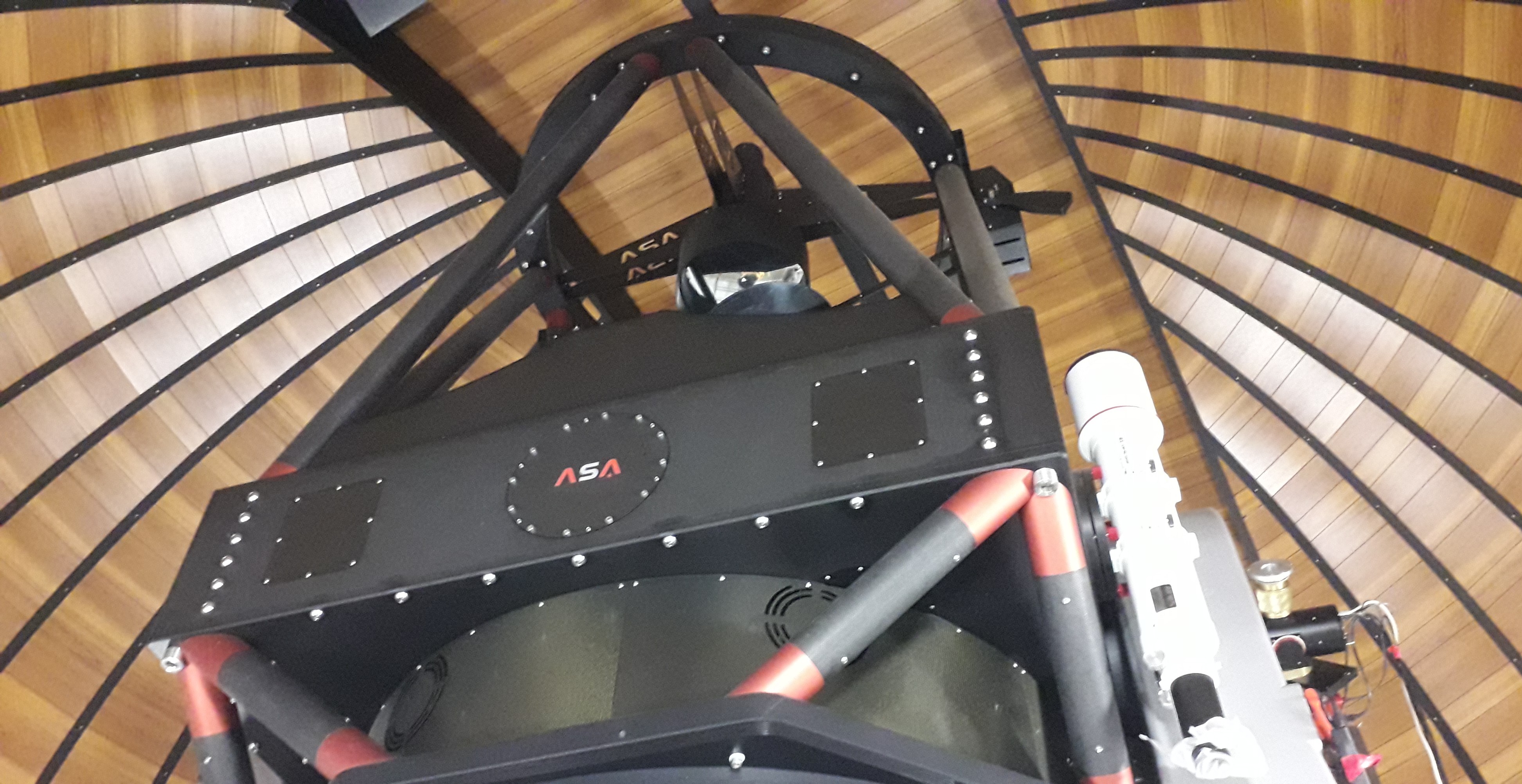
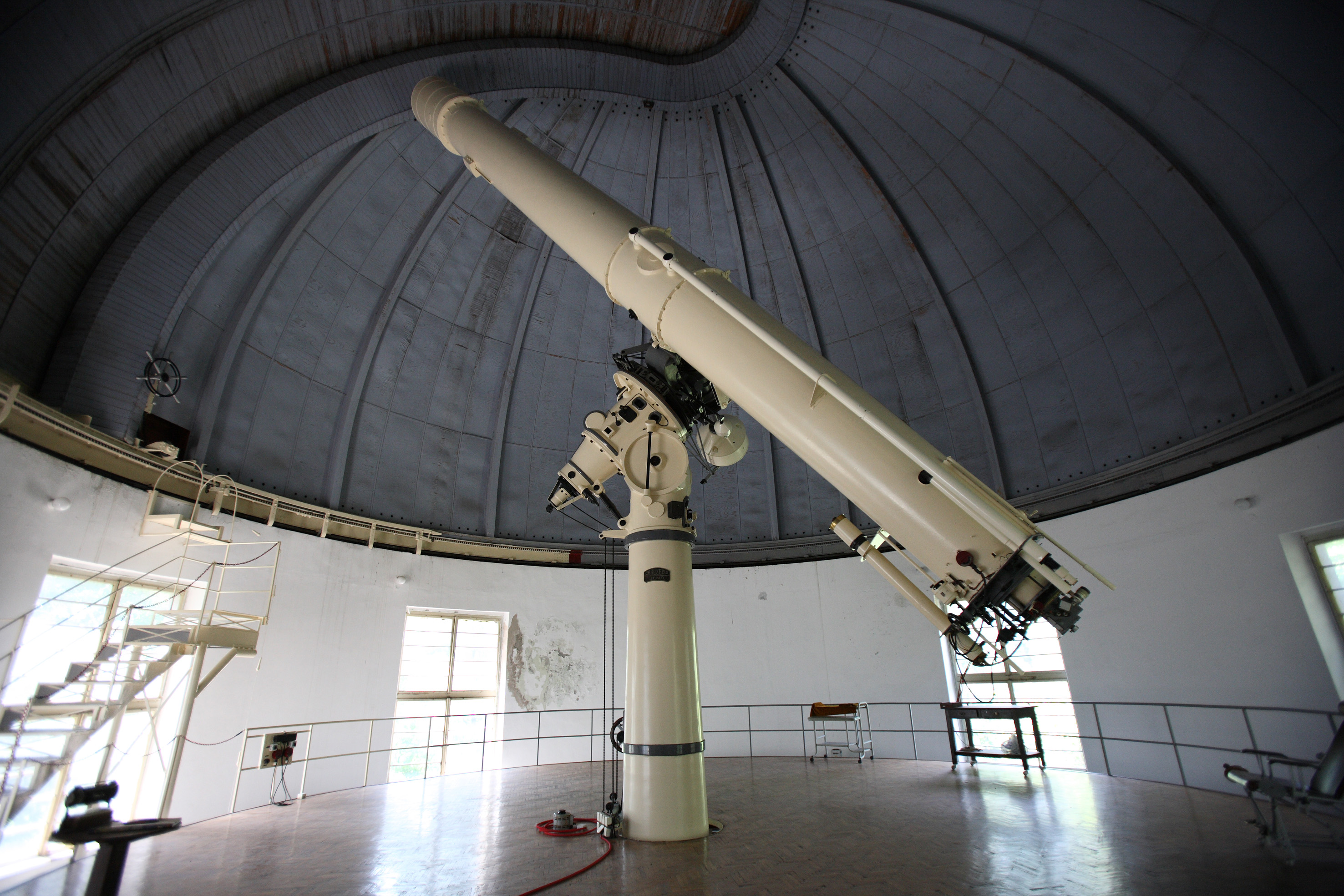
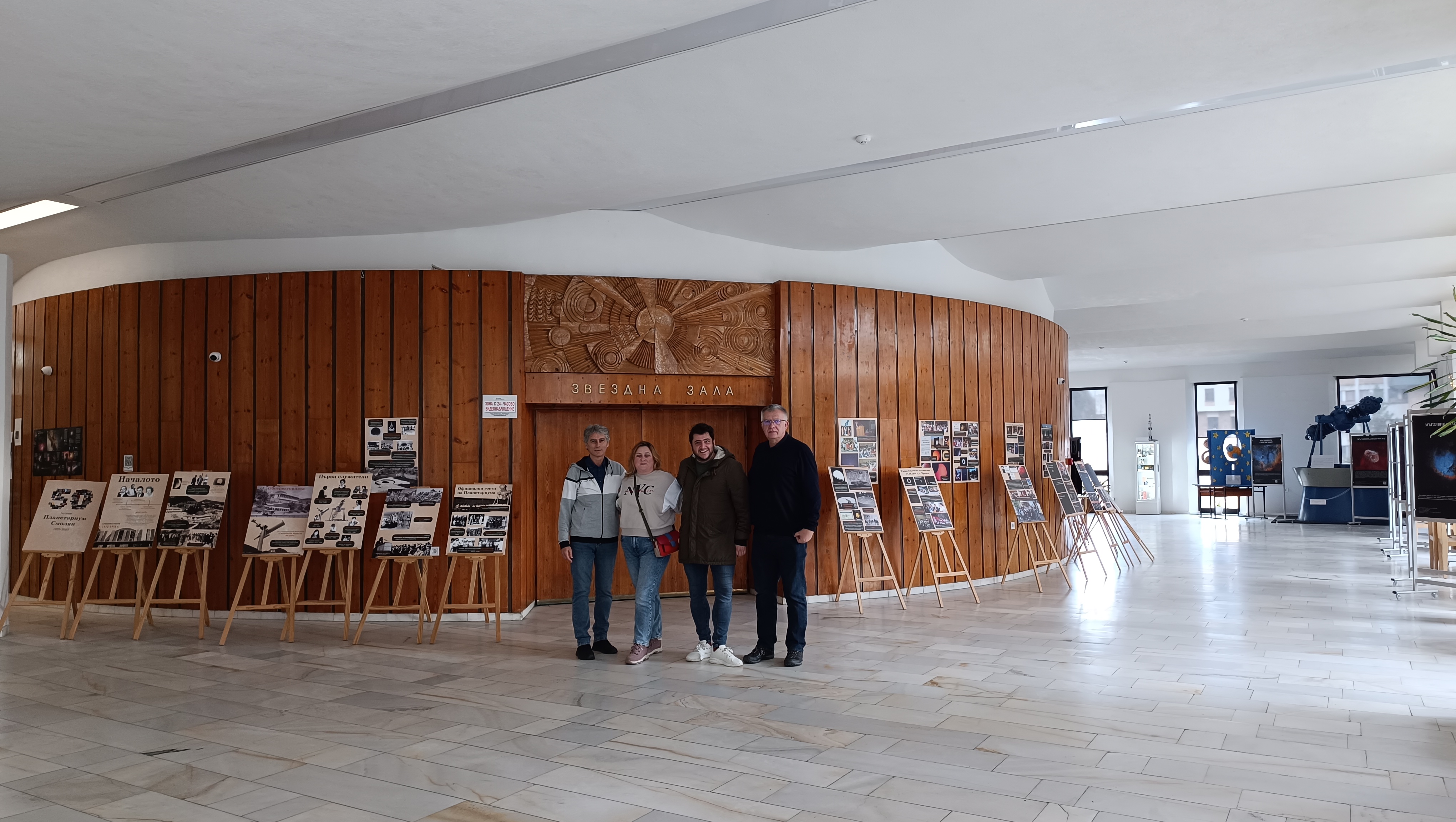
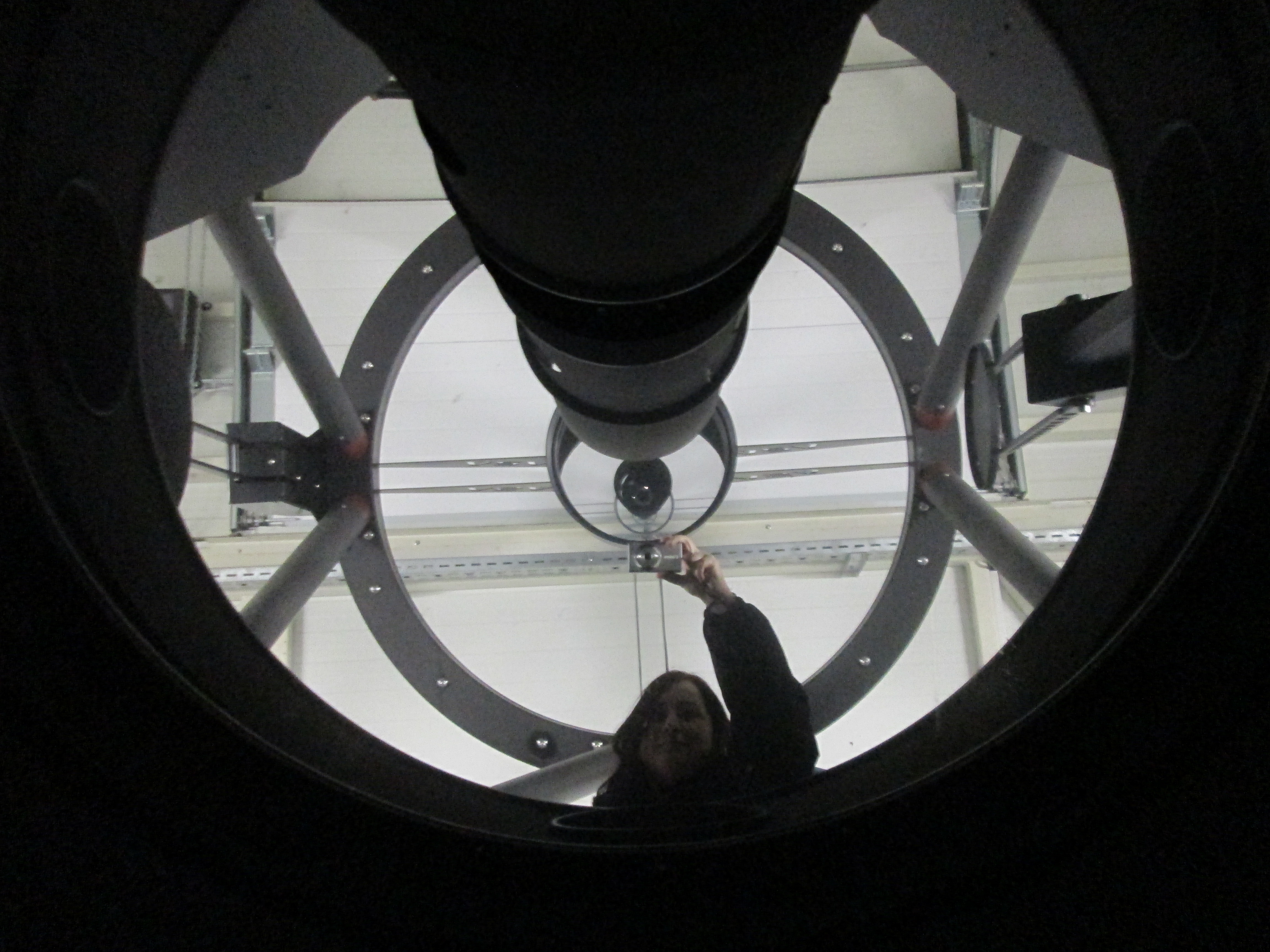
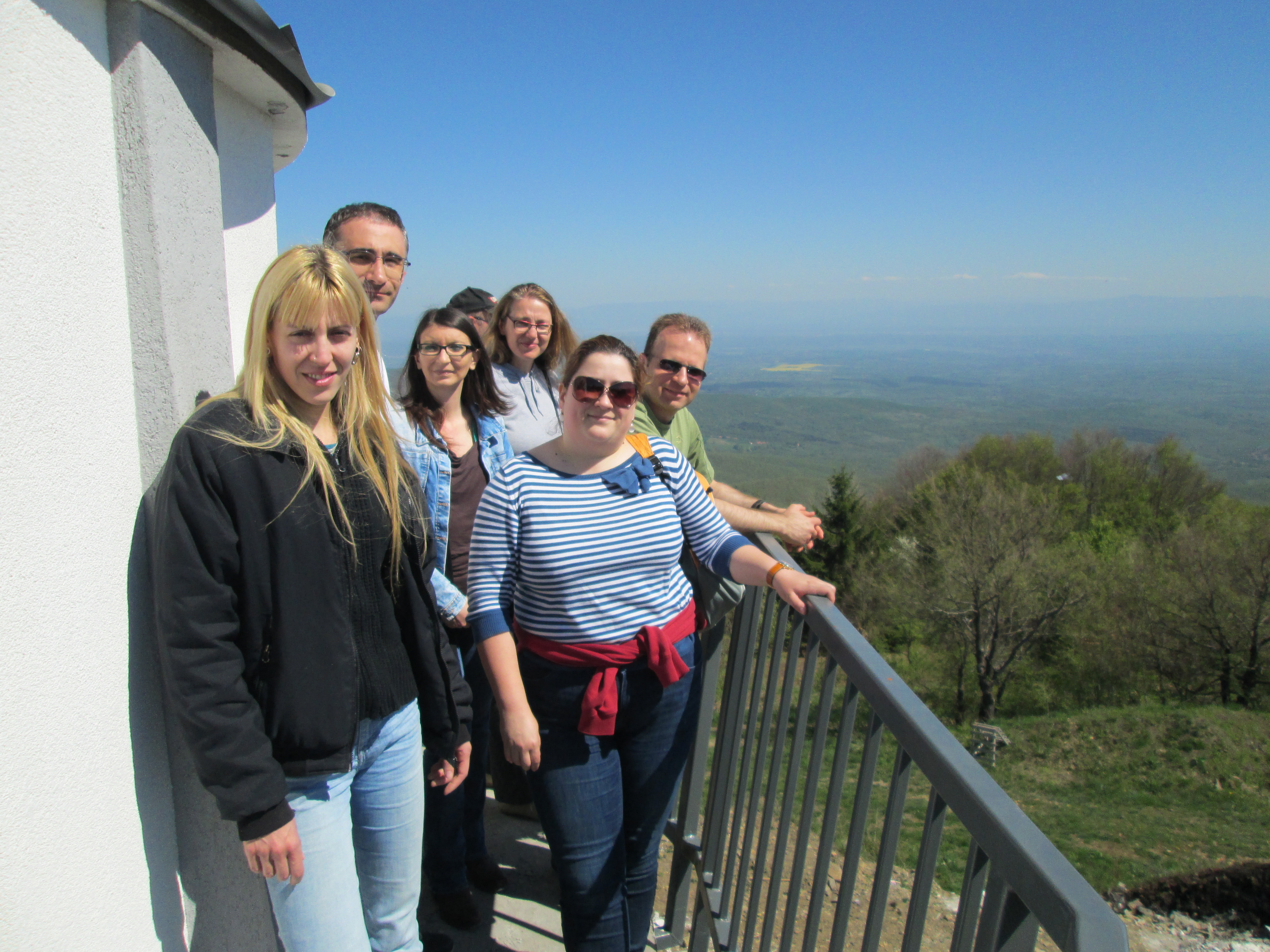
A few selected photos.
I would be happy to talk to you if you need my assistance in your research.